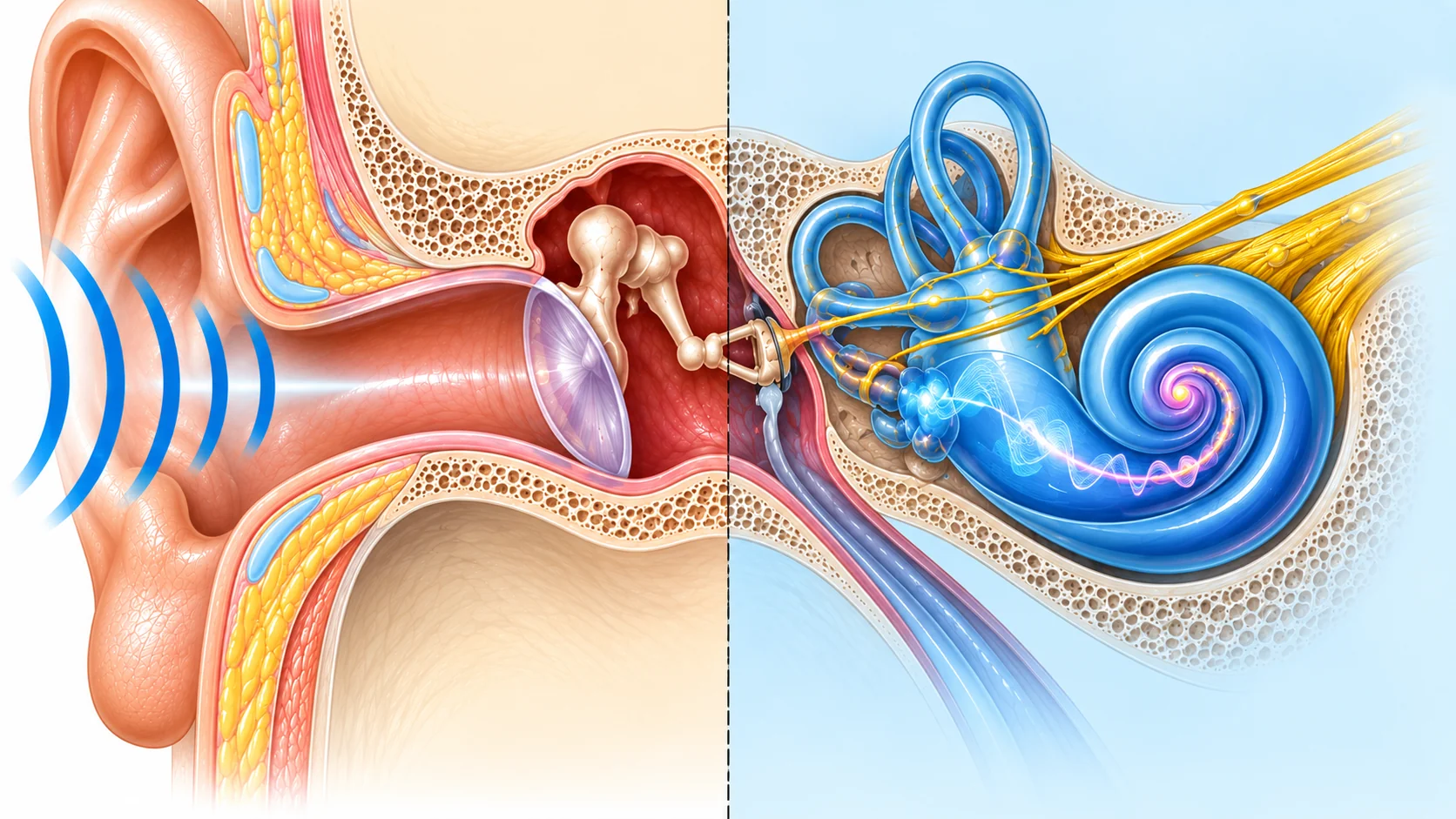
Hearing loss may be mild or severe, affect one or both ears, and develop gradually over years or suddenly. Identifying where the problem arises is the first step in choosing treatment.
Types of hearing loss
Conductive hearing loss: sound does not reach the inner ear effectively. Common causes include earwax, otitis externa, middle-ear fluid, eardrum perforation and otosclerosis. The underlying cause can often be treated.
Sensorineural hearing loss: the problem affects the cochlea or auditory nerve. Causes include ageing, noise exposure, some medicines, Ménière’s disease, sudden hearing loss and, more rarely, nerve lesions. Mixed hearing loss combines both components.
Sudden hearing loss: urgent assessment
A sudden hearing reduction, especially on one side, needs rapid assessment in the first days. It should not be assumed to be earwax or a cold without examination.
ENT assessment distinguishes conductive from sensorineural loss. Audiometry should be performed as soon as possible and within 14 days of onset. For sudden sensorineural loss, guidelines consider corticosteroids an option within two weeks, with benefits and risks discussed with the patient. If recovery is incomplete, intratympanic steroid salvage treatment should be offered between two and six weeks. Recovery varies and cannot be predicted with certainty.
Hyperbaric oxygen therapy
Guidelines consider hyperbaric oxygen an option, not a mandatory treatment, for sudden sensorineural hearing loss. It may be combined with steroids within two weeks as initial treatment or within one month as salvage treatment.
When indicated, Dr Dehgani-Mobaraki refers patients to the affiliated hyperbaric chamber at FlexorLab, San Martino in Campo, Via delle Fascine 8, Perugia.
One-sided or asymmetric hearing loss
Different hearing levels between the ears, especially with one-sided tinnitus or imbalance, warrant targeted investigations. MRI may be indicated to exclude rare causes such as vestibular schwannoma; most cases have another cause.
Hearing assessment
Assessment includes endoscopic ear examination, pure-tone and speech audiometry, and tympanometry, available at all consultation venues. MRI or other specialist investigations are used when indicated.
Treatment options
Options include treating the cause, such as removing earwax or managing infection or middle-ear fluid; systemic or intratympanic corticosteroids for indicated sudden loss, sometimes with hyperbaric oxygen; hearing aids for permanent loss following audiological assessment; or referral to specialist centres for surgery or implants when appropriate.
Frequently asked questions
I have heard less in one ear since yesterday: can I wait?
No. Sudden hearing loss needs prompt assessment, preferably in the first days.
Does tinnitus mean I am losing my hearing?
Tinnitus often accompanies hearing loss, even mild loss. Audiometry helps establish whether this is the case.
Does everyone need hearing aids?
No. It depends on the type and degree of hearing loss and its effect on daily life. Assessment is individual.
Author: Dr Puya Dehgani-Mobaraki, specialist in Otorhinolaryngology and Head and Neck Surgery. Clinical review: October 2026. This information is educational and does not replace medical diagnosis or a prescription.